
Gas Continuous Flow Hot Water System
A gas continuous flow hot water system, also known as an instantaneous or tankless gas hot water system, heats water only when you need it, providing endless hot water without the need for a storage tank. Instead of heating and storing water all day, continuous flow units activate the moment you turn on a tap. Cold water passes through a heat exchanger inside the unit, where it is instantly heated by a gas burner and delivered directly to your shower, kitchen, or laundry at a steady, reliable temperature.
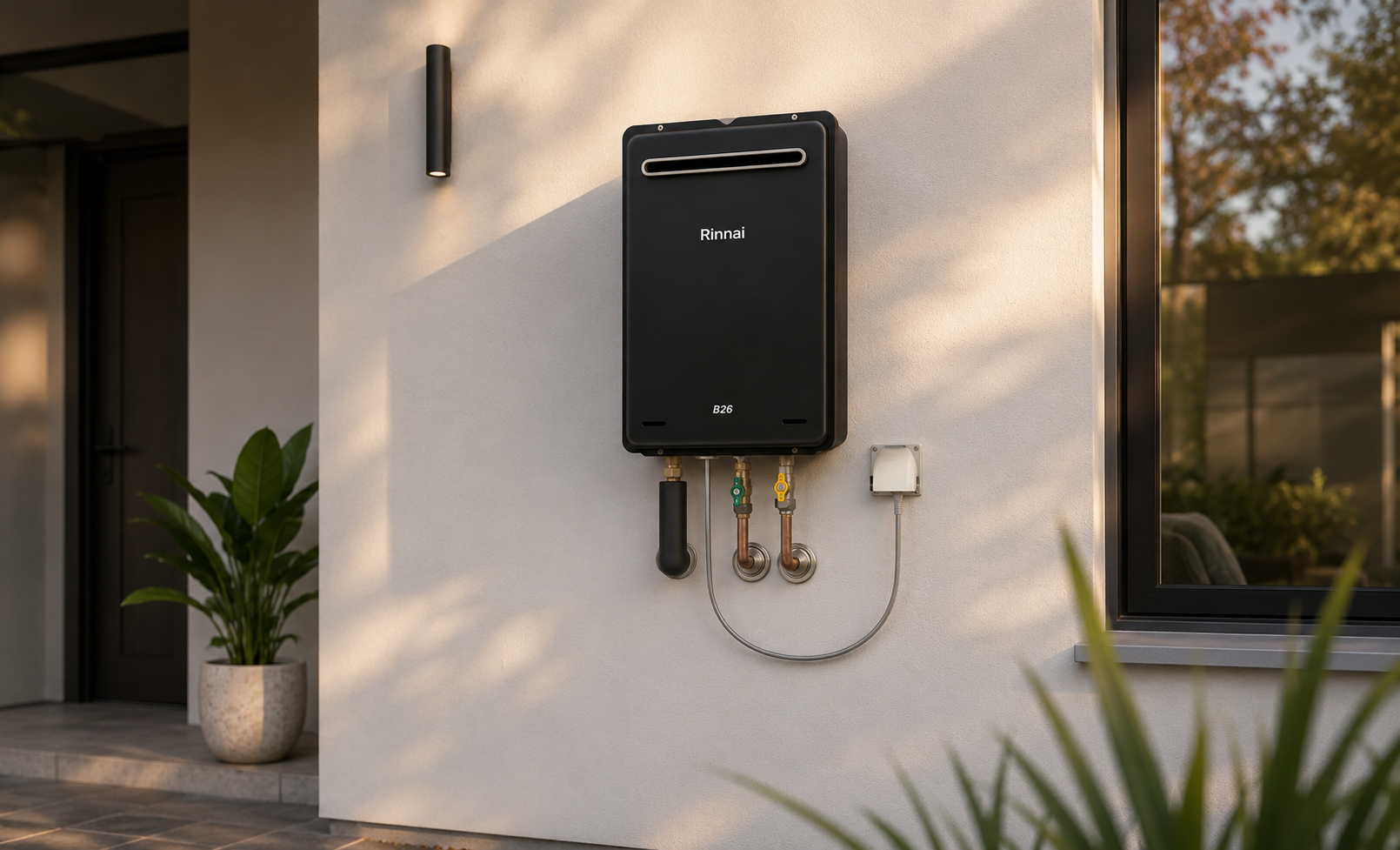
Because the system only heats water on demand, it is highly energy efficient and avoids the heat loss that occurs in traditional storage tanks. Gas continuous flow systems are compact, wall mounted, and ideal for homes with limited space, larger families, or households wanting reliable hot water at any time of day.
These systems deliver unlimited hot water, consistent performance, strong water pressure, and fast recovery, making them one of the most popular hot water solutions in Ballarat, Geelong and Central Victorian homes. With modern safety features, digital temperature control, and a long service life, continuous flow gas systems are a dependable and efficient upgrade for many properties.
STEP BY STEP
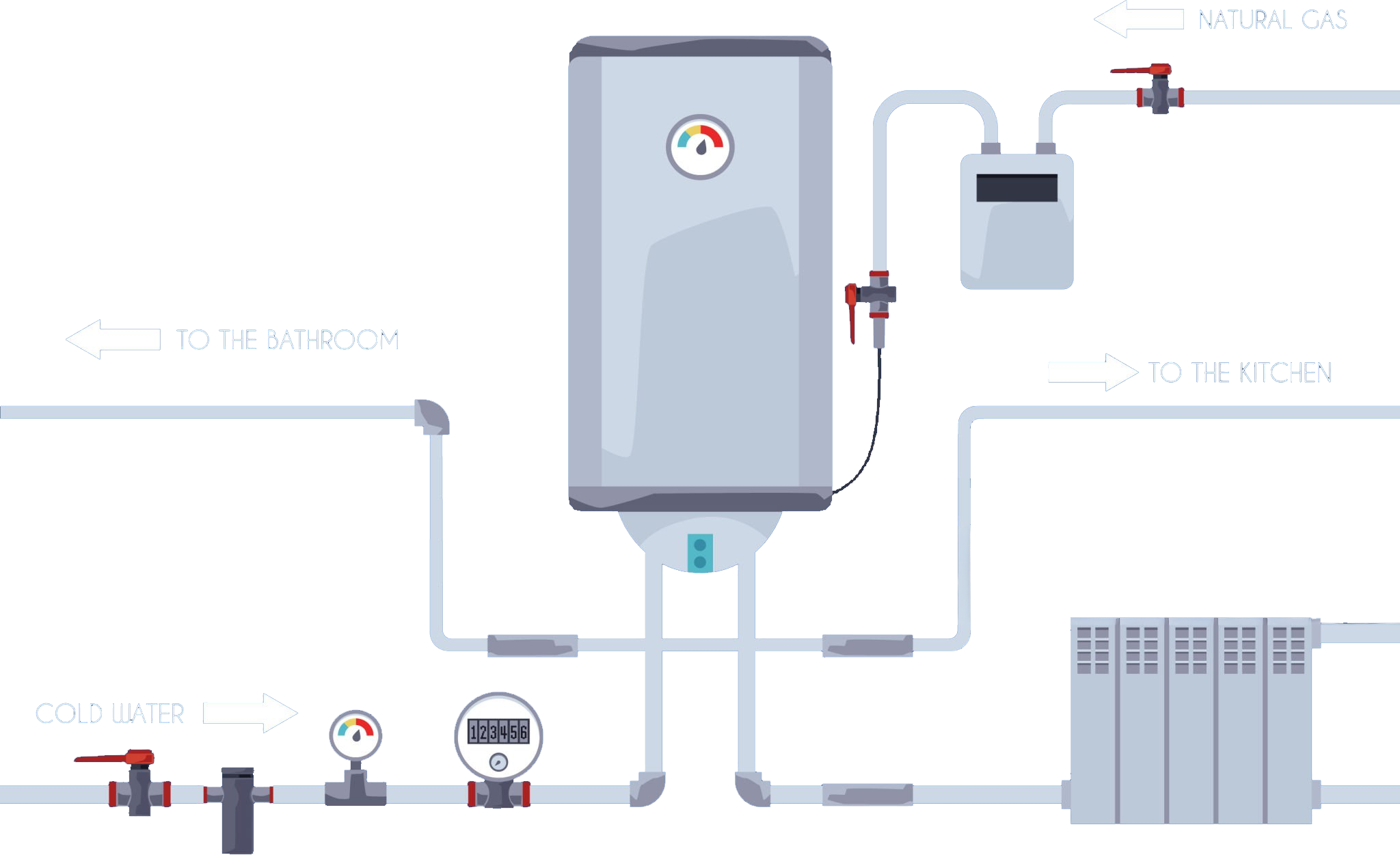
How a Gas Continuous Flow Hot Water System Works
1
You turn on a hot tap
You open a hot tap in the shower, kitchen or laundry.
This creates water flow through the pipes and into the unit.
2
The unit senses the water flow
Inside the heater there’s a flow sensor.
As soon as it detects water moving through the system, it sends a signal to “wake up” the burner.
3
The gas burner ignites
The system’s control board opens the gas valve and uses either an electronic igniter or pilot to light the gas burner.
This burner sits directly underneath or around a heat exchanger.
4
Cold water enters the heat exchanger
Cold mains water flows through small copper or stainless-steel pipes that are tightly wound inside the heat exchanger.
As the burner runs, it heats these pipes very quickly.
5
Water is heated instantly as it passes through
As water moves through the heated pipes, it absorbs heat from the burner.
Because the pipes have a large surface area and the burner is powerful, the water heats up in a few seconds as it passes through.
6
The unit constantly checks and adjusts the temperature
A temperature sensor monitors the outgoing water.
The system’s control board automatically adjusts the burner flame up or down to keep the water at your set temperature (for example, 50°C or 60°C).
7
Hot water flows to your tap or shower
The now-heated water travels straight from the unit to your tap, shower or appliance.
There’s no storage tank, so the hot water just keeps coming as long as the tap is open.
8
You turn the tap off and the unit shuts down.
When you close the tap:
- Water flow stops
- The flow sensor detects no movement
- The gas valve closes and the burner turns off
- The unit goes into standby, using virtually no energy until the next time you need hot water
9
Safety features quietly run in the background
Throughout all of this, the system is:
- Monitoring flame presence
- Checking temperature and water pressure
- Shutting down if anything becomes unsafe
- Modern units also include over-temperature protection and, often, digital controllers inside the home.
Pros
Endless Hot Water
Because water is heated on demand, you never run out like you can with storage tanks, making it perfect for families with multiple showers or high usage.
Compact & Space-Saving
These slim, wall-mounted units free up space because there’s no bulky storage tank taking up room outside or inside the home.
Consistent Temperature
Digital controllers allow you to set the exact water temperature (e.g., 50°C or 60°C), improving comfort and safety.
Faster Recovery Than Storage Units
Since the system heats instantly, it’s ideal for homes with high hot water demand, as it keeps up easily without waiting for a tank to refill.
Long Lifespan & Easy Maintenance
Fewer corrosion risks (no stored water) result in longer operational life and minimal maintenance requirements compared to tank systems.
Great Pressure Performance
These units generally provide strong, stable water pressure throughout the home.
Cons
Requires Gas Supply
Homes without existing natural gas or LPG may need extra work or may be better suited to a heat pump system.
Flow Rate Limit
If too many taps run at the same time, the system can reach its maximum flow rate and reduce temperature slightly.
Choosing the right-sized unit fixes this.
Not Eligible for Solar Ballarat, Geelong and Central Victoria Heat Pump Rebates
Heat pumps qualify for large rebates, while continuous flow gas units typically do not.
Slight Delay Before Water Heats
There is a short moment between turning the tap on and hot water reaching the outlet (normal for all instantaneous systems).
Rebates That Work Behind the Scenes - Just Like Us
Eligible for the Ballarat, Geelong and Central Victorian Energy Upgrades Program? We’ll Help You Claim It.
Let’s get your system right - and make sure you’re rewarded for choosing well.
- We manage all the VEU paperwork for you
- Guidance on gas-to-electric upgrades
- Rebates applied in the background - no hassle, no shortcuts