
How Does Reverse Cycle Air Conditioning Work?
Reverse cycle air conditioning works by moving heat from one place to another using a refrigerant, a compressor and a reversing valve.
In cooling mode, the system collects heat from the air inside your home and releases it outdoors. In heating mode, the reversing valve changes the direction of the refrigerant, so the system collects heat from the outside air and releases it indoors.
The detail below is worth knowing before you spend money on a system, because most of the things that go wrong with reverse cycle comfort trace back to sizing, ducting or install quality.
Reverse Cycle Air Conditioning in Plain Language
Every reverse cycle system is a heat pump. A refrigerant circulates through a sealed loop, picking up heat in one place and releasing it in another.
In cooling mode, the system collects heat from the air in your rooms and releases it outside.
In heating mode, the same system collects heat from the outside air and releases it into your rooms.
The whole idea of them is that the system relocates heat that already exists in the air, which is how it can deliver several units of heating for each unit of electricity it draws.
Our guide to how reverse cycle air conditioning works walks through the refrigeration cycle step by step.
The Refrigeration Cycle in Five Steps
Reverse cycle comes in three common residential formats, all three run on the same principle. What separates them is how the conditioned air reaches your rooms.
1.
Warm air from your rooms passes across the indoor coil. Liquid refrigerant inside the coil absorbs that heat and evaporates into a gas.
2.
The compressor in the outdoor unit raises the pressure of that gas, which raises its temperature well above the outside air temperature.
3.
The hot gas passes through the outdoor coil. A fan moves outside air across the coil, the heat transfers into it, and the refrigerant condenses back into a liquid.
4.
The liquid passes through an expansion valve, which drops its pressure and its temperature sharply.
5.
The cold refrigerant returns to the indoor coil and the loop starts again.
Air is delivered back into the room cooled and dehumidified. The heat that was in your rooms is now in the air outside.
The Components Doing the Work
Compressor
Raises the pressure and temperature of the refrigerant gas. The main energy user in the system.
Indoor coil
Exchanges heat with the air in your home.
Outdoor coil
Exchanges heat with the air outside.
Expansion valve
Drops the pressure of the liquid refrigerant so it is cold enough to absorb heat again.
Reversing valve
Redirects the refrigerant so the two coils swap roles. This is the component that makes a system reverse cycle.
Inverter
Varies compressor speed so the system holds a steady temperature with fewer hard on and off cycles.
How the System Switches Into Heating Mode
The reverse in reverse cycle points to a component called the reversing valve. It changes the direction the refrigerant travels around the loop.
In one direction, the indoor coil absorbs heat and the outdoor coil releases it and that gives you cooling.
Switch the direction. Now the outdoor coil absorbs heat and the indoor coil releases it. That gives you heating.
So a single system, a single set of ducts or indoor units, and one installation covers the full Ballarat year. That is the practical appeal of reverse cycle heating and cooling for homes here.
Why Moving Heat Uses So Little Electricity
A reverse cycle system spends its electricity on moving heat that is already present in the air. That takes far less energy than producing the same amount of heat with an electric element.
According to energy.gov.au, reverse cycle air conditioners on the Australian market operate between 300 and 600 per cent efficiency, so one unit of electrical energy delivers three to six times as much heating or cooling energy.
That ratio is why reverse cycle is the benchmark for all-electric home comfort, and why it holds up on a Ballarat electricity bill through a long winter.
How the Conditioned Air Reaches Your Rooms
The refrigeration cycle is the same in every reverse cycle system. Delivery is what changes.
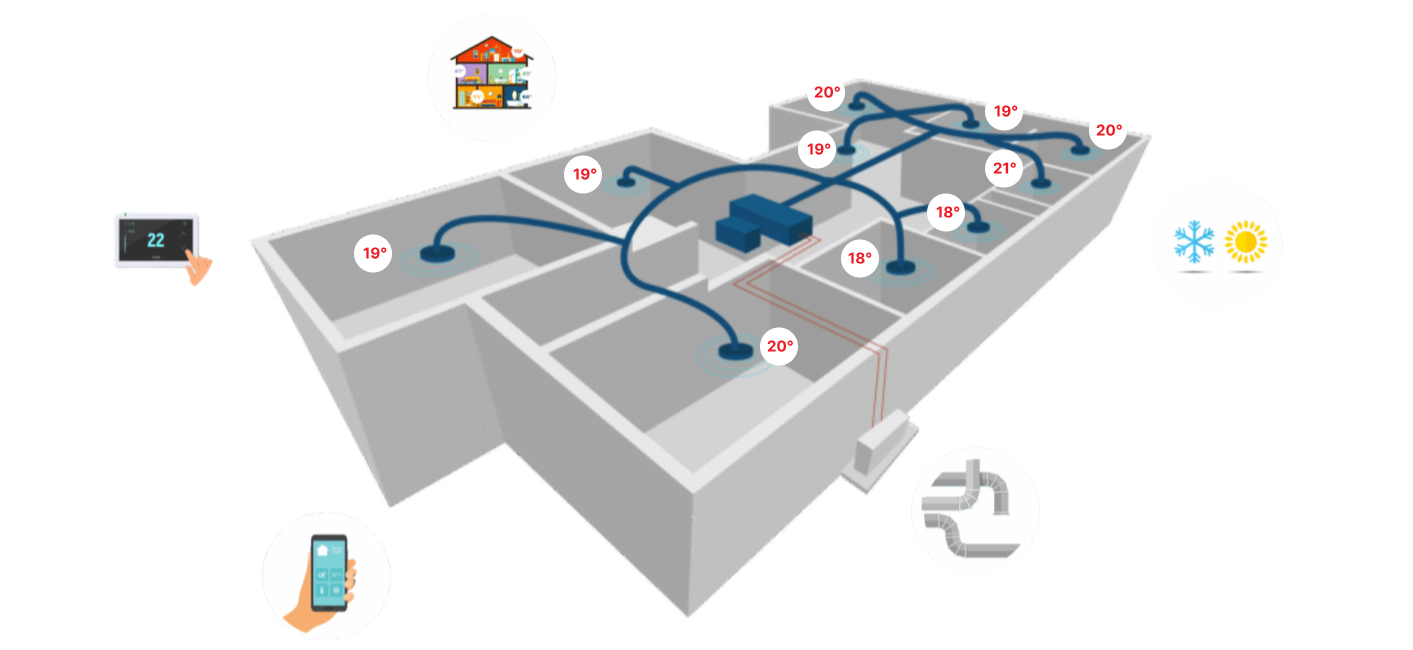
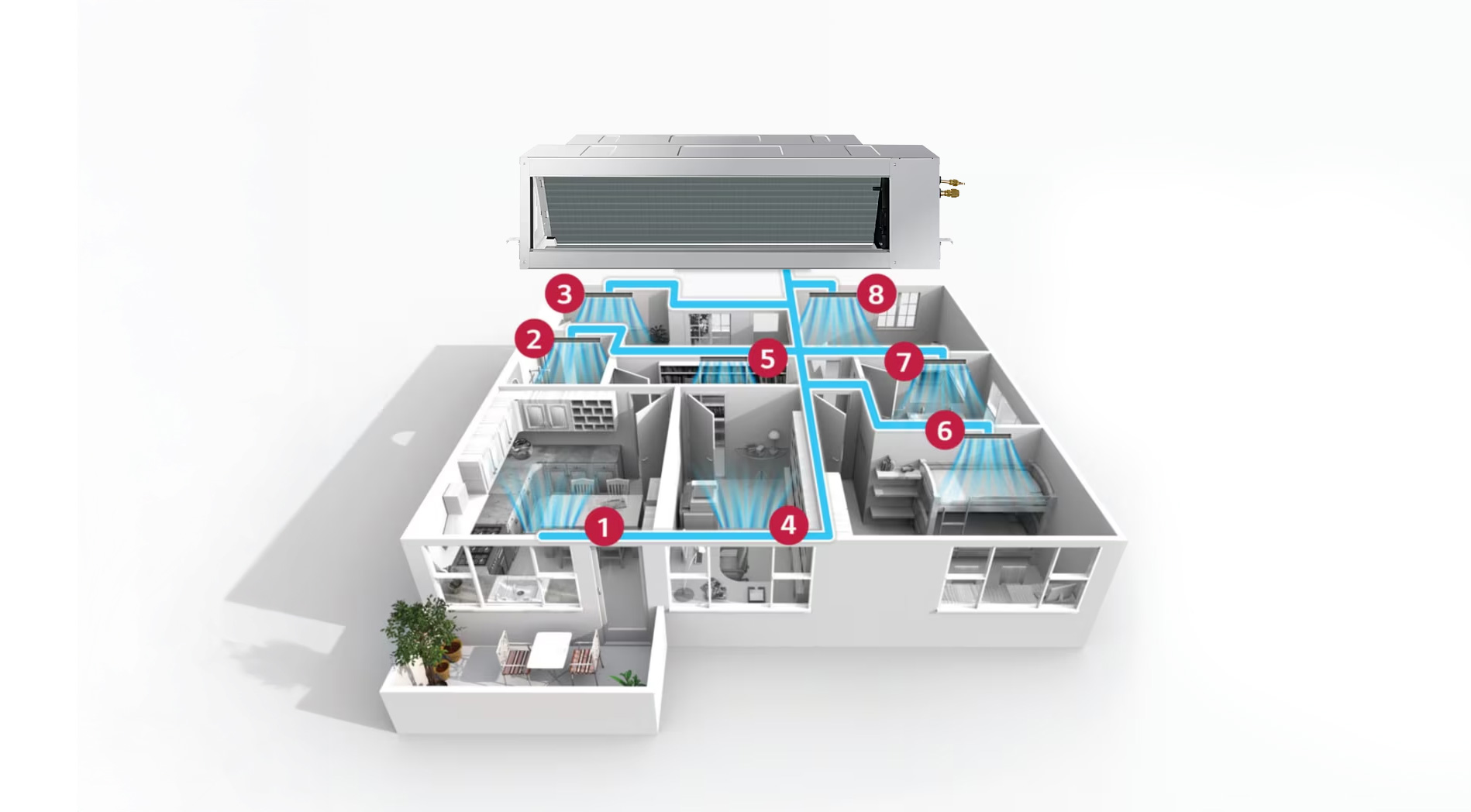
In a ducted reverse cycle system, a central indoor unit conditions the air and a fan pushes it through insulated ducts to vents in each room, with return air drawn back to the unit. Zone dampers open and close to direct that air where it is needed.
In a multi split system, up to six indoor units each condition their own room, all connected by refrigerant lines to one outdoor unit.
In a back-to-back split, one indoor unit conditions one space, with the outdoor unit mounted on the other side of the same wall.
What Changes How Well the Cycle Performs
The equipment is only part of the outcome. The below factors also play into how well they perform:
Correct sizing
Capacity should be calculated from the building itself, not the floor area. Systems that miss the mark short cycle, handle humidity poorly, or run flat out without reaching the set temperature.
Ceiling insulation
Conditioned air is only as useful as the building holding it in. Ceiling insulation does part of the work for the system.
Duct design and sealing
Undersized, poorly routed or leaking ducts lose conditioned air into the roof space before it reaches the room.
Zoning setup
Zones need to be planned against how the household actually lives, and against the minimum airflow the unit requires.
Filter and coil cleanliness
A blocked filter restricts airflow, which drags down both capacity and efficiency.
Outdoor unit placement
The outdoor unit needs clear airflow. Enclosed courtyards and tight slat screening choke it.
Frequently Asked Questions
How does ducted reverse cycle air conditioning work?
A ducted reverse cycle system has one central indoor unit, usually in the roof space, that heats or cools air and pushes it through insulated ducts to vents in each room. Air returns to the unit through a return air grille to be conditioned again. Zone dampers in the ductwork direct the airflow to selected areas.
Is a reverse cycle air conditioner a heat pump?
Yes. A reverse cycle air conditioner is an air-source heat pump. It extracts heat from the outside air in winter and moves heat out of the home in summer. Hot water heat pumps use the same principle applied to water.
Does reverse cycle heating use gas?
No. Reverse cycle systems run entirely on electricity. There is no gas connection, no combustion and no flue, which is why they are the usual choice for households moving to an all-electric home.
Does reverse cycle air conditioning use outside air?
It uses outside air to exchange heat at the outdoor coil, and that air stays outside. The air circulating through your rooms is indoor air being recirculated and conditioned, so the system does not bring outdoor air into the house.
What temperature should you set reverse cycle heating to?
For heating, 18 to 20 degrees is the usual recommendation for a comfortable and efficient setting. Every extra degree adds noticeably to energy consumption, so nudging the thermostat higher costs more than most people expect.
Does reverse cycle heating dry the air?
Reverse cycle heating does not remove moisture from the air the way cooling mode does, though warmer air holds more moisture, so the relative humidity in the room drops and the air can feel drier. Households that notice it often run a bowl of water or a humidifier in the main living area.
Get a System Designed Around Your Home
Knowing how the cycle works is useful. Getting the sizing, ducting and zoning right for your specific house is what actually delivers the comfort.
We are a family-owned team based in Lucas, Ballarat. We assess your home on site, design the system around it, and give you a clear fixed quote before anything is booked.
Book a free on-site assessment or call (03) 4320 0480. We are available Monday to Saturday, 8am to 6pm.